
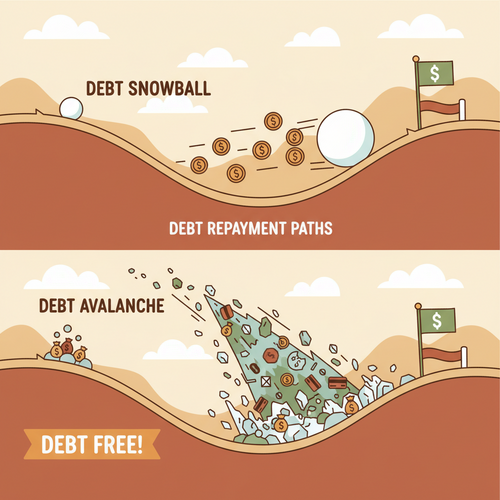
Navigating student loan debt can feel overwhelming, but understanding repayment strategies like the Snowball vs. Avalanche method offers clear pathways. Indeed, choosing the right approach significantly impacts your financial journey. Therefore, many beginner investors often seek the most effective way to eliminate this burden. This guide will clarify both methods, helping you decide which aligns best with your personal finance goals.
Student loans represent a significant financial obligation for millions. Consequently, developing a solid repayment plan is crucial. However, the sheer volume of information can be daunting for those new to personal finance. This is where strategic methods prove invaluable. Furthermore, knowing your options empowers you to tackle debt with confidence. We will explore two popular and powerful strategies: the Debt Snowball and the Debt Avalanche.
Understanding Your Student Loans
Before diving into repayment tactics, grasping your current loan situation is essential. Specifically, identify your loan types. Do you hold federal loans, private loans, or a combination? Furthermore, understand your interest rates for each loan. Higher interest rates typically mean more money paid over time. Lastly, note your minimum monthly payments and their due dates. These details form the absolute foundation of any effective debt reduction plan; therefore, gathering this information should be your very first step.
For instance, federal loans often come with unique benefits, such as income-driven repayment options, deferment, and forbearance. Conversely, private loans might offer fewer flexible payment plans and generally have stricter terms. Knowing these distinctions is vital for making strategic choices. Moreover, checking your credit report regularly helps monitor your financial health, as timely loan payments contribute positively to your score. Always strive to understand every aspect of your debt obligations, including late fees and payment penalties. This foundational knowledge will serve you exceptionally well throughout your repayment journey, enabling you to make truly informed decisions.
The Debt Snowball Method Explained
The Debt Snowball method prioritizes psychological wins over mathematical efficiency. Specifically, you list all your debts from the smallest balance to the largest. Crucially, you ignore interest rates in this arrangement. Then, you make minimum payments on all loans except the smallest one. Consequently, you throw all extra money at that smallest debt.
Once the smallest debt is paid off, you take the money you were paying on it and add it to the minimum payment of the next smallest debt. Thus, your payment “snowballs” as you tackle each subsequent loan. This process continues until all your debts are gone. Many people find immense motivation in seeing debts disappear quickly, even small ones.
Pros of the Debt Snowball Method
- Motivation Boost: Paying off entire debts quickly provides significant psychological momentum. Therefore, it keeps you engaged.
- Simplicity: It is easy to understand and implement. Consequently, less financial expertise is required.
- Increased Likelihood of Success: Many studies show people stick with this method longer due to early wins. Indeed, consistency is key.
Cons of the Debt Snowball Method
- Mathematically Less Efficient: You might pay more interest over time. This happens because higher interest debts might remain longer.
- Slower Long-Term Savings: While motivating, it does not prioritize saving money on interest. Consequently, it costs more in the long run.
- Focuses on Balance, Not Cost: Specifically, it ignores the actual cost of your debt. Therefore, it might not be ideal for all situations.
The Debt Avalanche Method Explained
Conversely, the Debt Avalanche method focuses on saving the most money. Specifically, you list all your debts from the highest interest rate to the lowest. This approach prioritizes mathematical efficiency. You make minimum payments on all loans except the one with the highest interest rate. Subsequently, you direct all extra funds towards that highest-interest debt.
Once the highest-interest debt is fully repaid, you apply its former payment amount, plus any extra funds, to the loan with the next highest interest rate. This strategic focus ensures you minimize the total interest paid. Therefore, it frees up more money in your budget over the long term. Many financially savvy individuals prefer this method.
Pros of the Debt Avalanche Method
- Maximum Interest Savings: This method saves you the most money. Consequently, your overall debt cost decreases significantly.
- Faster Debt Elimination (Mathematically): You will pay off your loans faster in terms of total time. This happens due to reducing the most expensive debts first.
- Smart Financial Strategy: It aligns with sound financial principles. Furthermore, it maximizes your financial resources.
Cons of the Debt Avalanche Method
- Less Immediate Gratification: Progress can feel slower initially. Especially if your highest-interest debt is also a large balance.
- Requires Discipline: You need a strong commitment to stick with it. Therefore, maintaining motivation without early wins can be challenging.
- Can Be Demotivating: If your highest-interest debt is large, it might take a long time to pay off. Consequently, it can test your patience.
Snowball vs. Avalanche Method: Which is Right for You?
Deciding between the Snowball vs. Avalanche method depends on your personal financial psychology and goals. Both are valid strategies. However, their effectiveness varies based on individual preferences. Consider these factors before making your choice.
Financial Mindset
Do you need quick wins to stay motivated? If so, the Debt Snowball might be ideal. Indeed, seeing small debts disappear provides a powerful psychological boost. Conversely, are you disciplined and focused solely on saving money? The Debt Avalanche method will likely suit you better. Therefore, reflect on your money management style.
Debt Landscape
Examine your loan portfolio. Do you have many small loans with varying interest rates? The Snowball could clear several quickly. However, if you have one or two large loans with extremely high interest, the Avalanche method saves significant money. Consequently, analyze your specific situation carefully.
Long-Term Goals
Are you aiming for the absolute lowest total cost of debt? The Avalanche is your best bet. Conversely, if eliminating debt quickly, even if it costs a bit more, drives your decision, choose the Snowball. Furthermore, understand that financial peace of mind sometimes outweighs strict mathematical efficiency for some individuals.
Beyond Snowball vs. Avalanche: Other Repayment Strategies
While the Snowball vs. Avalanche method are powerful, other strategies exist. For instance, consider student loan refinancing. This involves taking out a new loan with a lower interest rate to pay off your existing ones. However, it often requires a good credit score. Furthermore, refinancing federal loans into private ones means losing federal benefits.
Income-driven repayment (IDR) plans are another option for federal loan holders. Specifically, your monthly payments adjust based on your income and family size. Consequently, this can provide much-needed relief during challenging financial periods. Loan forgiveness programs also exist for certain professions. Always research all available avenues. You can find more information on government resources like the U.S. Government’s official website.
Furthermore, budgeting remains a critical component of any debt repayment plan. Creating a detailed budget helps identify areas where you can cut expenses. Subsequently, these freed-up funds can accelerate your loan payments. Consistency in budgeting is vital. For instance, useful resources can be found on sites like Investopedia for comprehensive financial guidance.
Consider also increasing your income. Picking up a side hustle or negotiating a raise can significantly boost your repayment capacity. Therefore, always look for opportunities to enhance your cash flow. Even small increases can make a large difference over time. Consistently applying extra funds is key.
Making an Informed Decision
Ultimately, the best method for paying off student loans is the one you will stick with consistently. Both the Snowball vs. Avalanche method offer clear frameworks and proven success. However, personal motivation plays a huge role in long-term success, perhaps even more than raw mathematical efficiency. Evaluate your personality and financial situation honestly before committing. Do you find greater satisfaction in frequent small victories, or can you endure a longer initial period for maximum financial gain? You can always adjust your strategy later if needed, as personal circumstances often change. For additional insights into financial markets and global economics, consider visiting Reuters for current events and expert analyses. Furthermore, the Wall Street Journal offers invaluable business and finance news, helping you understand the broader economic landscape that impacts your finances. Finally, for practical advice on everyday money management, sites like NerdWallet are excellent resources, providing actionable tips and tools for budgeting and debt management. Choosing wisely now empowers your financial future.
Conclusion
Paying off student loans is a marathon, not a sprint. Whether you choose the psychological boost of the Debt Snowball or the mathematical efficiency of the Debt Avalanche method, consistency is paramount. Consequently, understanding your loans, setting clear goals, and maintaining discipline will pave your way to financial freedom. Start today by making an informed choice. Your future self will thank you for taking control of your financial destiny.