
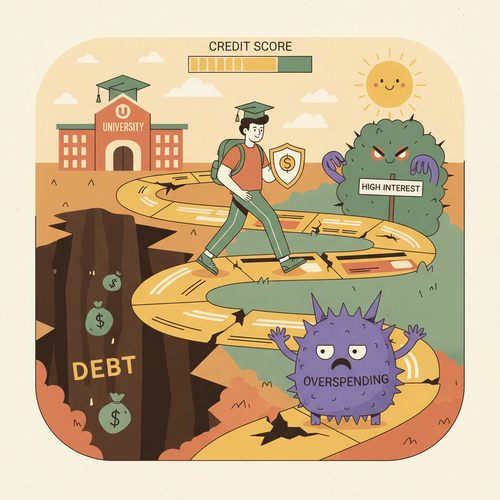
Avoiding credit card debt freshman year is a crucial financial skill for any college student. Indeed, a credit card can seem like a ticket to financial freedom, particularly when starting an independent life. However, these powerful tools carry significant risks. Therefore, understanding how to use them wisely is paramount. Consequently, mastering responsible credit card usage prevents painful financial pitfalls.
What is a Credit Card, Really?
A credit card offers a line of credit, allowing you to borrow money up to a specific limit. Furthermore, it enables purchases without immediate cash. You promise to repay the borrowed amount later. Specifically, this repayment often includes interest if you do not pay your balance in full. Credit limits vary widely. Also, interest rates, or Annual Percentage Rates (APRs), are crucial to understand. Often, these rates can be quite high.
Understanding Key Terms
- Credit Limit: This is the absolute maximum amount of money you can charge on your card. Financial institutions set this limit based on your creditworthiness. Exceeding your credit limit can incur hefty fees. Furthermore, it negatively impacts your credit score. Therefore, always stay well below this ceiling.
- Interest Rate (APR): The Annual Percentage Rate (APR) represents the cost of borrowing money over a year. Specifically, it is expressed as a percentage. High APRs, particularly for student cards, can quickly inflate your outstanding balances. Consequently, even small purchases become much more expensive if you carry a balance. Understanding your APR is fundamental.
- Minimum Payment: This is the smallest amount you are required to pay by your due date. However, paying only the minimum is a deceptive strategy. Mostly, it only covers accrued interest and a tiny fraction of the principal. Thus, your debt reduces at an agonizingly slow pace, or sometimes not at all. Indeed, paying only the minimum significantly extends your repayment period.
- Due Date: This critical date marks the deadline for your payment. Missing it carries severe repercussions. Not only do you incur late fees, but a missed payment can also severely damage your credit score. Furthermore, some card issuers impose a penalty APR for late payments. Setting up reminders is therefore highly advisable.
Indeed, familiarity with these terms empowers you. Consequently, you can make informed decisions. Responsible usage stems from this foundational knowledge.
Why Freshmen Are Particularly Vulnerable
College freshmen encounter a myriad of unique challenges. Many individuals are experiencing true financial independence for the very first time. For instance, managing personal finances without parental oversight is an entirely new and complex skill. Additionally, the vibrant campus environment often introduces new spending temptations. Credit card companies, unfortunately, frequently target students with enticing offers. Therefore, the allure of seemingly easy credit can be incredibly strong for those without prior experience. Furthermore, a prevailing lack of experience with budgeting and financial planning often exacerbates these inherent risks. Students might not fully grasp the severe, long-term implications of accumulating debt. Consequently, what appears to be a small, insignificant purchase can very quickly spiral into a substantial and unmanageable financial problem. Peer pressure to maintain a certain lifestyle further complicates matters.
The Anatomy of a Credit Card Debt Trap
A debt trap is a vicious cycle of borrowing and minimum payments. It makes escaping debt incredibly difficult. Understanding its components is vital. Specifically, several factors contribute to this dangerous cycle.
High-Interest Rates
Credit cards often carry high-interest rates. Indeed, rates for student cards can be particularly steep. When you do not pay your balance in full, interest accrues daily. Furthermore, this interest is calculated on your remaining balance. Consequently, even small purchases can grow significantly over time. It can feel like an endless uphill battle.
The Minimum Payment Fallacy
The minimum payment requirement, while seemingly manageable, is often a significant component of a debt trap. However, it typically covers a minuscule portion of the principal balance. Predominantly, these payments are structured to cover the interest that has already accrued. Thus, your overall debt reduces at an agonizingly slow pace, or sometimes not at all. For instance, a persistent $500 balance carrying a 20% APR could realistically take years, even decades, to pay off if only minimum payments are made. This approach not only extends your repayment period significantly but also drastically inflates the total cost of your original purchases. Consequently, a small initial debt can become a financial anchor.
Late Fees and Penalties
Missing a due date incurs late fees. Specifically, these fees add to your balance. Furthermore, a late payment can trigger a penalty APR. This penalty significantly increases your interest rate. Therefore, your debt grows even faster. Indeed, these charges are costly additions.
Damaging Your Credit Score
Poor credit card management severely harms your credit score. Consequently, this affects future financial opportunities. For instance, obtaining loans for a car or house becomes harder. Renting an apartment also becomes more difficult. Even some employers check credit scores. Therefore, maintaining a good credit score from the start is crucial.
Strategies for Avoiding Debt Traps
Preventing debt is far easier than resolving it later. Implementing smart financial habits early is key. Therefore, consider these proactive strategies.
Budgeting is Your Best Friend
Creating and strictly adhering to a detailed budget is arguably your most effective defense against debt. Specifically, meticulously track all sources of your income and diligently record every expense. This includes tuition, rent, groceries, entertainment, and even small daily coffees. Know exactly how much money you have coming in. Also, crucially, understand precisely where every single dollar is being spent. Many readily available apps and online tools can assist with this tracking. For instance, a simple spreadsheet or a budgeting app can be highly effective in visualizing your cash flow. A well-constructed budget empowers you to make intentional and informed spending choices. Consequently, you can proactively avoid the pitfalls of overspending and unexpected financial shortfalls.
Understand Your Card Agreement
Read the fine print. Indeed, every credit card comes with comprehensive terms and conditions. Pay close attention to the specific APR, any potential annual fees, and the late payment penalties. Furthermore, understand your billing cycle thoroughly. Knowing these intricate details prevents unwelcome surprises. Conversely, ignorance can undeniably lead to costly mistakes and unforeseen charges.
Pay in Full, Always
Paying your statement balance in full, every single month, is truly the golden rule of responsible credit card usage. Adhering to this principle completely avoids any interest charges whatsoever. Thus, you are effectively utilizing the credit card purely for its convenience and fraud protection, rather than as an expensive, short-term loan. You essentially receive an interest-free loan for a period of up to 30 days. Therefore, prioritize clearing your entire balance by the due date monthly. This diligent practice saves you a significant amount of money. Furthermore, it builds a solid foundation for your credit history.
Build an Emergency Fund
Unexpected expenses inevitably arise during college life. For instance, a broken laptop, an urgent trip home, or an unforeseen medical bill. Without an adequate emergency fund, you might instinctively rely on your credit card to cover these costs. Consequently, this can quickly lead to accumulating debt. Start by saving a small, consistent amount regularly. Over time, this growing fund provides a vital safety net.
Consider the “One Card Rule” (Initially)
Managing multiple credit cards, especially for beginners, can quickly become overwhelming. Therefore, it is highly advisable to begin your credit journey with just one credit card. This singular focus simplifies the critical task of tracking your spending and remembering due dates. It also significantly minimizes the risk of accumulating debt across several disparate accounts. As you gain valuable experience and demonstrate consistent responsible usage, you can then consider incrementally adding more cards. Simplicity, in this initial phase, is your greatest ally.
Monitor Your Spending Regularly
Do not wait for your official monthly statement to arrive. Instead, make it a habit to check your online account frequently, perhaps several times a week. This proactive approach allows you to spot any potential errors or unauthorized transactions quickly. Furthermore, it helps you remain acutely aware of your current outstanding balance and spending patterns. Regular monitoring reinforces responsible spending habits. Consequently, you maintain control over your finances rather than letting them control you. Many banking apps offer real-time updates.
Set Up Payment Alerts
Most credit card companies offer convenient email or text alerts. Use these invaluable tools for payment reminders. Also, set alerts for large transactions to track suspicious activity. This proactive measure helps prevent late payments. Consequently, it meticulously protects your credit score from unnecessary harm. Indeed, these small steps offer big benefits for financial peace of mind.
Be Wary of “Freebies”
Credit card companies sometimes offer enticing incentives. For instance, free t-shirts, gift cards, or other perks at campus events. These promotional items are often strategically designed to entice new users. However, the true cost can be astronomically high if you inadvertently fall into a debt trap. Therefore, evaluate the credit card itself, its terms, and its benefits, not just the temporary allure of a free gift.
Know Your Credit Score
Your credit score is a numerical representation of your creditworthiness. It typically ranges from 300 to 850. A higher score consistently signifies better financial responsibility. Regularly check your score for free through reputable sources. Sites like AnnualCreditReport.com provide complimentary reports. Consequently, you can track your progress and identify areas for improvement. Building a good score now pays significant dividends later.
For more comprehensive financial education and robust resources, consider visiting reliable sources such as Investopedia or the Federal Trade Commission. These platforms offer invaluable insights into personal finance and consumer protection.
Building Good Credit Habits
Beyond simply avoiding debt, actively building good credit is a profoundly worthy long-term goal. This critical endeavor involves consistent, positive financial behaviors over time.
Make Timely Payments
Your payment history stands as the most significant factor influencing your credit score. Therefore, making all payments on time is absolutely paramount. Consider setting up automatic payments directly from your checking account. Consequently, you drastically reduce the risk of ever missing a crucial due date. A single late payment can severely impact your score for months, if not years.
Keep Credit Utilization Low
Credit utilization refers to the amount of credit you are currently using compared to your total available credit limit. Financial experts universally recommend keeping this ratio below 30%. For instance, if your credit limit is $1,000, strive to carry a balance no higher than $300 at any given time. A lower utilization rate signals responsible management to credit bureaus. Conversely, a high utilization rate can suggest financial distress. Therefore, strive to pay down large balances quickly.
Regularly Review Credit Reports
Check your credit report annually. Look diligently for any inaccuracies or fraudulent activity. You can obtain a free report from reputable sources like Reuters or the Federal Reserve. Correcting errors promptly protects your financial standing. Furthermore, it safeguards against identity theft.
When to Seek Help
Sometimes, despite your best efforts, credit card debt can become overwhelming and challenging to manage. Do not feel ashamed or hesitant to seek professional assistance.
Talk to a Financial Advisor
Many universities, fortunately, offer free financial counseling services specifically for students. These knowledgeable advisors can help create a realistic debt repayment plan. Furthermore, they provide personalized guidance tailored to your specific situation.
Consider Credit Counseling
Non-profit credit counseling agencies can offer invaluable support. They often help negotiate with creditors on your behalf. Specifically, they can develop a comprehensive Debt Management Plan (DMP). These essential services are frequently free or low-cost. For instance, the National Foundation for Credit Counseling (NFCC) offers extensive resources.
Remember, addressing debt early prevents it from snowballing into an insurmountable problem. Help is readily available if you need it. You can find valuable resources through organizations like NerdWallet.
Conclusion
Avoiding credit card debt freshman year is an entirely achievable goal with careful planning and disciplined financial habits. Credit cards are powerful financial tools, offering convenience and security. However, they demand respect, constant vigilance, and a thorough understanding of their mechanics. Remember to budget meticulously and adhere to your spending limits. Pay your entire statement balance in full every single month. Also, actively monitor your spending and regularly review your credit report for accuracy. By diligently adopting these responsible practices, you can successfully build a strong, positive financial foundation. Therefore, your freshman year can truly be a time of learning and profound personal growth, completely free from the burden of unnecessary debt. Embrace financial literacy now for a more secure and prosperous future.