
Executive Summary
- Private educational debt restructuring presents significant opportunities for optimizing capital structures.
- Strategic refinancing arbitrage leverages market inefficiencies for superior yield extraction.
- Direct lending models enhance spread capture through streamlined origination and servicing.
Understanding Private Educational Debt Dynamics
Private educational debt constitutes a distinct asset class within consumer finance. Its unique characteristics demand granular analysis. Unlike federal programs, private loans typically lack income-driven repayment options. This absence shifts credit risk profiles significantly.
Lender portfolios often exhibit varying degrees of duration mismatch. Interest rate volatility directly impacts their net interest margins. Understanding these intrinsic dynamics is foundational for effective restructuring. Credit quality assessments remain paramount. These evaluations inform all subsequent strategic decisions.
The Mechanics of Refinancing Arbitrage in Student Loans
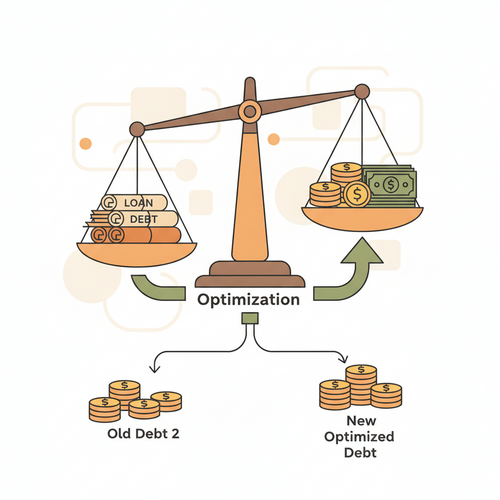
Refinancing arbitrage exploits discrepancies between current interest rates and existing loan terms. It involves replacing higher-cost debt with lower-cost alternatives. For private educational loans, this often means securing new financing at more favorable rates. The arbitrage opportunity emerges from market pricing inefficiencies. These inefficiencies can be driven by macroeconomic shifts or individual credit profile improvements.
Successful execution requires meticulous timing and due diligence. Borrowers must assess their eligibility for superior terms. Lenders evaluate creditworthiness through rigorous underwriting processes. This often includes FICO scores, debt-to-income ratios, and employment stability. The goal is to reduce the borrower’s weighted average cost of capital (WACC). Simultaneously, investors seek higher risk-adjusted returns.
Interest rate environments significantly influence arbitrage potential. Declining rate cycles amplify the attractiveness of refinancing. Conversely, rising rates can diminish immediate benefits. Market participants must monitor yield curve movements closely. These yield curve dynamics dictate available spread opportunities. Understanding the mechanics of refinancing is crucial.
Direct Lending Spreads: Origination, Servicing, and Risk Premium
Direct lending bypasses traditional intermediary banks. This model allows lenders to originate and service loans internally. Such vertical integration provides greater control over the loan lifecycle. It significantly impacts the achievable lending spreads. Direct originators capture fees typically absorbed by third parties. This enhances their profitability margins.
Servicing capabilities are critical to direct lending success. Efficient servicing reduces operational costs. It also mitigates default risks through proactive borrower engagement. The risk premium incorporated into direct lending spreads reflects several factors. These include the borrower’s credit profile, loan duration, and market liquidity conditions. Higher perceived risk typically commands a larger spread.
From an operational standpoint, direct lending optimizes the capital deployment process. It fosters direct relationships with borrowers. This direct engagement can improve loan performance. It also allows for more flexible restructuring solutions. The absence of syndicated structures streamlines decision-making. This agility provides a competitive advantage in niche markets.
Expert Insight: Yield Curve Inversion Impact
A sustained yield curve inversion often signals impending economic slowdowns. This environment can compress lending spreads. Originators must adjust their pricing models accordingly. Prudent risk management becomes even more critical during these periods. Capital preservation strategies gain prominence.
Strategic Approaches to Debt Restructuring: Beyond Conventional Methods
Conventional debt restructuring often involves simple refinancing or consolidation. Advanced strategies delve into more complex financial engineering. These include structured settlement negotiations and partial loan sales. They also encompass creative collateral arrangements.
Portfolio rebalancing represents a sophisticated approach. Lenders may divest underperforming assets. They can then reinvest in higher-quality or more strategically aligned debt. This active management optimizes overall portfolio yield. It also improves risk-adjusted returns.
For borrowers, exploring alternative payment structures is vital. Income-share agreements (ISAs), though less common for private debt, represent an innovative model. Negotiations for principal reduction are rare but not impossible. They typically occur under extreme hardship conditions. These situations require compelling financial justification. Debt for equity swaps, while prevalent in corporate finance, are nascent in private educational debt. Their application remains limited but evolving.
Another strategy involves “trenching” loan portfolios. This separates loans into tranches based on risk profiles. Different tranches can then be sold to investors with varying risk appetites. This securitization technique enhances liquidity. It also allows for granular risk pricing. Understanding arbitrage strategies is key.
Macroeconomic Factors Influencing Lending Spreads and Arbitrage Opportunities
Global macroeconomic trends exert significant influence on lending markets. Central bank monetary policy decisions are paramount. Interest rate adjustments directly impact the cost of capital. Quantitative easing or tightening measures affect liquidity. This directly influences the availability and pricing of credit.
Inflation rates also play a critical role. High inflation erodes the real value of future loan repayments. Lenders demand higher nominal rates to compensate for this erosion. Economic growth forecasts dictate employment stability. Stable employment supports borrower repayment capacity. Conversely, recessionary fears heighten credit risk. This widens required lending spreads.
Geopolitical events introduce systemic risk. These events can trigger capital flight or currency volatility. Such instability impacts investor confidence. It also affects the funding costs for lenders. Understanding these interconnected dynamics is crucial. It enables proactive risk mitigation and opportunity identification. Market participants must integrate macroeconomic analysis into their forecasting models.
Regulatory Landscape and Compliance Considerations
The regulatory environment for private educational debt is complex and dynamic. Compliance with federal and state lending laws is mandatory. Regulations cover areas such as disclosure requirements and fair lending practices. They also govern debt collection standards. Non-compliance carries severe financial penalties and reputational damage.
Recent legislative changes often introduce new compliance burdens. Lenders must adapt their operational frameworks swiftly. This includes updating loan origination systems and servicing protocols. Consumer protection agencies actively monitor market conduct. Their oversight aims to prevent predatory lending practices. Adherence to these guidelines is non-negotiable. It ensures ethical operations and long-term viability.
Data privacy regulations, like GDPR or CCPA, also affect lenders. Protecting sensitive borrower information is paramount. Cybersecurity measures must be robust. Regulatory scrutiny extends to advertising and marketing materials. All communications must be transparent and accurate. A proactive compliance framework mitigates legal and operational risks. It builds trust with borrowers and regulators alike.
Advanced Portfolio Optimization for Private Loan Portfolios
Portfolio optimization for private educational loans extends beyond simple diversification. It involves sophisticated analytical techniques. These include stress testing and scenario analysis. The goal is to maximize expected returns for a given level of risk. Or, conversely, to minimize risk for a target return.
Duration management is critical for fixed-income portfolios. It involves matching asset and liability durations. This mitigates interest rate risk. Convexity analysis further refines this approach. It accounts for non-linear price-yield relationships. Hedging strategies, using interest rate swaps or caps, can protect against adverse rate movements. These instruments provide crucial downside protection.
Credit default swaps (CDS) can be employed to manage specific credit exposures. This transfers credit risk to a third party. Active portfolio managers constantly rebalance their holdings. They adjust allocations based on market outlook and credit migration. Quantitative models assist in identifying optimal allocation strategies. These models factor in correlation, volatility, and credit quality. Their objective is to enhance portfolio resilience.
Emerging Technologies and Market Innovations in Debt Restructuring
Technological advancements are transforming the debt restructuring landscape. Artificial intelligence (AI) and machine learning (ML) enhance credit underwriting. They predict default probabilities with greater accuracy. This allows for more precise risk pricing. Blockchain technology offers potential for immutable record-keeping. It could streamline loan transfer and servicing. This transparency reduces fraud and operational overhead.
Fintech platforms facilitate peer-to-peer (P2P) lending. These platforms connect borrowers directly with investors. This disintermediation reduces costs. It also opens new avenues for funding and refinancing. Automated debt management tools assist borrowers. They optimize repayment schedules and identify savings opportunities. These tools empower individuals to manage their liabilities effectively.
Big data analytics provides unparalleled insights into borrower behavior. Lenders can tailor restructuring offers more precisely. This personalization improves borrower outcomes. It also enhances lender profitability. The integration of these innovations is creating a more efficient market. It enables faster, more accurate, and more accessible debt solutions. Embracing these technologies is imperative for market participants.
Conclusion
Optimizing private educational debt restructuring demands a multifaceted approach. It integrates sophisticated refinancing arbitrage. It leverages robust direct lending spreads. Navigating this complex financial ecosystem requires deep market acumen. A strong understanding of macroeconomic indicators is essential. Regulatory compliance remains a critical foundation.
Strategic portfolio optimization enhances long-term value. Emerging technologies offer transformative potential. These innovations streamline processes. They also improve risk management. Proactive engagement with these principles defines success. It maximizes returns for investors. It also provides better outcomes for borrowers. Are you effectively leveraging these strategies in your debt management framework?