
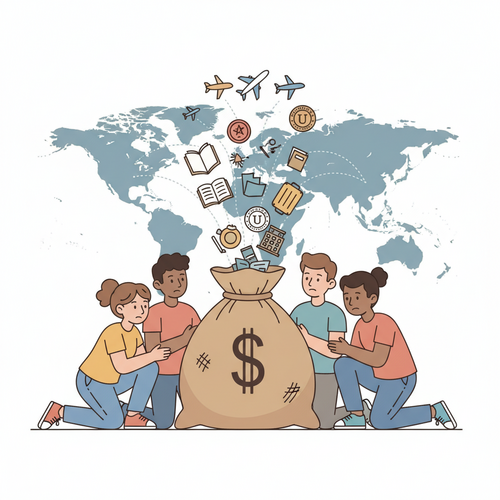
Dreaming of an international education? Exploring the True Cost of Studying Abroad 2026 is the first step toward making that dream a reality. It is an incredible adventure that can fundamentally change your life. However, focusing only on tuition fees is a common mistake that many beginners make. Consequently, they often find themselves financially stressed just a few months into their program.
The total financial commitment goes far beyond what you see on university brochures. We are talking about a complete and complex financial picture, including hidden administrative expenses and fluctuating global economics. Therefore, understanding every potential expense upfront is your best defense against unwelcome surprises during your stay. In my experience, a True Cost of Studying Abroad 2026 analysis must be holistic and detailed.
Quick Summary: Unpacking Your International Budget
- 💰 Tuition is just the start: You must budget for significant hidden costs like student visas, mandatory insurance, and daily living.
- 🧾 Early research is vital: Scholarship deadlines are often a year in advance, and currency rates are constantly fluctuating.
- 🛎️ Financial safety nets: Always build a robust plan that includes emergency funds for unexpected medical or travel expenses.
Unmasking the True Cost of Studying Abroad in 2026
Many students underestimate the total financial commitment required for an international degree. Unfortunately, this oversight can lead to significant emotional stress and might even cut short a promising academic experience. Therefore, you need to consider everything from pre-departure applications to your daily coffee habit abroad to stay within your limits.
Thinking holistically about your budget is paramount for long-term success. Besides the obvious fees, you must account for the inflation expected by 2026. This means that the prices you see today might be slightly higher by the time you actually land in your host country. Planning with a 10% buffer is a smart strategy used by seasoned international travelers.
Initial Investments: Costs Before You Even Pack
Before you even step foot on a plane, several significant costs will pop up in your journey. Application fees, standardized test costs (such as the SAT, GRE, or IELTS), and transcript evaluations add up surprisingly quickly. Furthermore, you might need extra funds for agent services or portfolio submissions if you are applying to creative arts programs.
Visa applications also come with their own heavy price tag, which varies significantly by country. In addition to the fee itself, you might need to prove you have a certain amount of liquid assets in your bank account. Don’t forget the cost of your international passport and any necessary health checks or mandatory vaccinations required for your student visa. 🛂
⚠️ Warning: Don’t Skimp on Pre-Departure Research!
Many students neglect to budget for essential pre-departure administrative expenses. Ignoring these can delay your plans or force you to make hasty, expensive decisions later. Always build in a financial buffer for these unexpected but necessary fees.
Tuition and Academic Fees: More Than Just the Basic Price Tag
This category is usually the largest chunk of your True Cost of Studying Abroad 2026, but it is rarely straightforward. University tuition can vary wildly between public and private institutions, and even between different degree programs within the same school. Additionally, you must factor in fees for student services, technology access, and possibly lab or studio usage.
Always verify if your chosen university offers a multi-year tuition lock or if increases are expected annually. A quick call to the international student office can clarify these critical details. Furthermore, do not assume that the current rate will stay fixed for your entire four-year program. In fact, many institutions raise their fees by 3% to 5% every year to keep up with inflation.
Accommodation: Finding Your Home Away From Home
Where you choose to live will significantly impact your monthly spending. On-campus housing often includes utilities like water and electricity, but it can be pricier than shared off-campus options in major metropolitan cities. Therefore, you must weigh the convenience of living near your classes against the potential cost savings of a private rental.
Renting a private apartment might offer more independence, but you will have to manage utilities, internet, and possibly furniture yourself. Conversely, homestays provide deep cultural immersion and usually involve a fixed weekly fee that covers meals. Understanding these trade-offs is a key part of calculating the True Cost of Studying Abroad 2026 accurately.
| Accommodation Type | Main Pros | Main Cons | Est. Monthly Cost (2026) |
|---|---|---|---|
| On-Campus Dorm | Social life, utilities included. | Less privacy, strict rules. | $900 – $2,000 |
| Shared Apartment | Independence, often cheaper. | Commuting, managing bills. | $600 – $1,400 |
| Homestay | Meals included, family support. | Adapting to host family rules. | $800 – $1,600 |
Daily Living Expenses: Where Many Get Caught Off Guard
This category is exactly where many students lose control of their finances. Your daily spending on groceries, local transportation, and personal care accumulates rapidly over thirty days. For example, eating out at restaurants three times a week can quickly deplete a budget that was originally designed for home-cooked meals.
Learning to cook and using public transport are the two most effective strategies for saving money abroad. Sticking to a strict weekly budget for groceries is a total game-changer for your financial health. Moreover, exploring local markets instead of high-end supermarkets can save you hundreds of dollars over a single semester. 🛒
Transportation: Navigating Your New Environment
Whether it is your daily commute to campus or weekend explorations of the surrounding countryside, transportation costs are very real. Most major cities offer significant student discounts on public transport passes, which can save you a fortune. Consequently, you should research these options the very day you arrive in your host city.
Consider the walking or cycling culture of your new home. A bicycle can be a fantastic, eco-friendly, and cost-effective way to get around without paying for bus or train tickets. Just remember to factor in the initial purchase price, maintenance, and the cost of a high-quality lock to prevent theft. 🚲
💡 Pro Tip: Leverage Student Discounts!
Always ask about student rates for everything from museums to cinema tickets and public transport. Many businesses offer special prices to anyone with a valid student ID. This small habit leads to massive savings over time. You can check global finance trends on The World Bank for more economic context.
Mandatory Health Insurance: A Vital Security Expense
Access to quality healthcare is non-negotiable, and international student health insurance is usually mandatory for your visa. Do not view this as an optional extra; it is your critical safety net during a medical emergency. Policies can vary significantly in their coverage and cost, so you must compare them carefully before signing up.
Some universities will automatically enroll you in their own plan, while others will allow you to purchase an approved external policy. Therefore, you must understand exactly what your policy covers before you actually need it. Media outlets like Bloomberg often report on global insurance trends and how they affect international travelers.
The Impact of Global Economics and Exchange Rates
Currency exchange rates can have a massive impact on your True Cost of Studying Abroad 2026. What seems affordable today might become expensive tomorrow due to sudden market fluctuations. If your home currency weakens against the host country’s currency, your living costs will effectively increase without your spending habits changing at all.
Keeping an eye on global economic news is the best way to anticipate these potential shifts. Resources like The Economist provide excellent insights into these market trends. Furthermore, consider using international transfer services that offer lower fees than traditional big-name banks to save money on every transaction.
Funding Your Dream: Scholarships, Loans, and Work
Fortunately, many options exist to help you offset these daunting costs. Scholarships are essentially “free money” and should always be your first priority. You should look for university-specific grants, government-sponsored programs, and private organization scholarships. Since the application process is often lengthy, you must start your search at least 12 months before you plan to leave.
Student loans are another viable option, but you must remember they are a debt that requires future repayment. Always understand the interest rates and the specific repayment terms fully before committing yourself to a loan. Only borrow what you truly need for your basic living and academic expenses. 🎓
Part-time work can also supplement your income while providing valuable local work experience. However, most student visas have strict restrictions on how many hours you can work per week (usually 20 hours). Always check the specific regulations for your destination country to avoid accidentally violating the terms of your visa. Websites like Forbes often share excellent advice on managing finances as a student.
Strategic Financial Planning Checklist for 2026
- ✅ Create a realistic budget: Use actual data from students currently living in your target city.
- ✅ Apply for grants early: Do not wait until the last minute to submit your scholarship applications.
- ✅ Know the rules: Understand exactly what your visa allows regarding employment and travel.
- ✅ Build an emergency fund: Aim for at least $3,000 to $5,000 for unexpected crises.
- ✅ Monitor the market: Watch currency trends to know the best time to transfer large sums of money.
Conclusion: Investing in Your Global Future
Studying abroad in 2026 is an investment in your personal and professional growth that will pay dividends for the rest of your life. By meticulously planning for the True Cost of Studying Abroad 2026, you ensure a smoother, less stressful, and far more rewarding experience. Do not let hidden expenses derail your dream of a global education.
Your ability to budget effectively and adapt to financial challenges will be one of the most valuable skills you gain during your time overseas. Therefore, embrace the challenge of managing your finances as an essential part of your international journey. What specific steps will you take today to start saving for your adventure?