
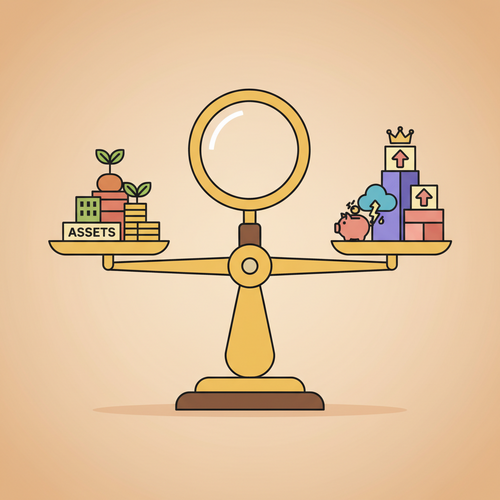
Understanding Balance Sheets is crucial for anyone seeking to grasp a company’s financial health, even if you are not a finance major. This essential financial statement acts like a snapshot, capturing a company’s assets, liabilities, and owners’ equity at a specific moment in time. Therefore, learning to interpret it can significantly enhance your investment decisions.
What Exactly is a Balance Sheet?
In essence, a balance sheet provides a comprehensive overview of what a company owns, what it owes, and the amount invested by its owners. This document adheres strictly to the fundamental accounting equation: Assets = Liabilities + Shareholder’s Equity. Consequently, the term “balance” reflects this equation; the two sides must always be equal. It is indeed a cornerstone of financial reporting, offering vital insights into a company’s financial structure.
The Accounting Equation Explained
The equation, Assets = Liabilities + Shareholder’s Equity, is the bedrock of all balance sheets. Specifically, assets represent economic resources expected to provide future benefits. Conversely, liabilities are obligations to other entities, requiring a future outflow of resources. Furthermore, shareholder’s equity represents the residual claim on the company’s assets after deducting all liabilities. Thus, this equation ensures the balance sheet always remains in equilibrium.
Assets: What a Company Owns
Assets are resources controlled by the company from which future economic benefits are expected to flow. Indeed, they are critical for a company’s operations and growth. Assets are generally categorized into two main types: current and non-current.
Current Assets
Current assets are those that can be converted into cash within one year or one operating cycle, whichever is longer. Specifically, these assets indicate a company’s short-term liquidity. For instance, common examples include:
- Cash and Cash Equivalents: Readily available funds.
- Marketable Securities: Investments easily converted to cash.
- Accounts Receivable: Money owed to the company by customers for goods or services already delivered.
- Inventory: Raw materials, work-in-progress, and finished goods available for sale.
- Prepaid Expenses: Payments made for expenses not yet incurred, such as rent or insurance.
Therefore, a healthy level of current assets suggests a company’s ability to meet its immediate obligations. This is a key indicator for potential investors.
Non-Current Assets (Long-Term Assets)
Conversely, non-current assets are those not expected to be converted into cash within one year. They are essential for a company’s long-term operations and sustained growth. These assets often represent significant investments. Examples include:
- Property, Plant, and Equipment (PP&E): Land, buildings, machinery, and vehicles. These are typically recorded at their cost less accumulated depreciation.
- Intangible Assets: Assets without physical substance but with economic value, such as patents, copyrights, trademarks, and brand recognition. Goodwill, arising from acquisitions, also falls into this category.
- Long-Term Investments: Investments in other companies held for more than a year, not intended for quick sale.
Consequently, analyzing non-current assets provides insight into a company’s operational capacity and future earning potential. These assets are vital for strategic planning.
Liabilities: What a Company Owes
Liabilities represent a company’s obligations to outside parties. They are essentially debts or financial obligations that must be settled in the future through the transfer of economic benefits. Similar to assets, liabilities are classified as either current or non-current.
Current Liabilities
Current liabilities are debts or obligations due for payment within one year or one operating cycle. These represent a company’s short-term financial commitments. Examples include:
- Accounts Payable: Money owed by the company to its suppliers for goods or services purchased on credit.
- Short-Term Debt: Loans or lines of credit due within a year.
- Accrued Expenses: Expenses incurred but not yet paid, such as salaries or utilities.
- Unearned Revenue (Deferred Revenue): Cash received for goods or services not yet delivered.
Understanding current liabilities helps assess a company’s ability to manage its immediate financial burdens. Therefore, investors often scrutinize these figures carefully.
Non-Current Liabilities (Long-Term Liabilities)
On the other hand, non-current liabilities are obligations due beyond one year. These are long-term financial commitments that impact a company’s solvency over an extended period. Specifically, they often finance long-term assets and operations. Common examples include:
- Long-Term Debt: Bonds payable, mortgages, and long-term loans.
- Deferred Tax Liabilities: Taxes that are owed but not yet due, often arising from differences in accounting and tax rules.
- Pension Obligations: Commitments to pay employee pensions in the future.
Indeed, analyzing long-term liabilities helps investors evaluate a company’s capital structure and its capacity to service debt over time. Investopedia offers further reading on this topic.
Shareholder’s Equity: The Owners’ Claim
Shareholder’s equity, often referred to as owners’ equity or stockholders’ equity, represents the residual claim on a company’s assets after all liabilities have been paid. Furthermore, it signifies the portion of the company’s assets financed by its owners, either directly through stock purchases or indirectly through retained earnings. Thus, it reflects the net worth of the company from the owners’ perspective.
Components of Shareholder’s Equity
Several key components make up shareholder’s equity:
- Common Stock: The par value of shares issued to investors. This represents the direct capital invested by owners.
- Additional Paid-in Capital: The amount investors paid for shares above their par value.
- Retained Earnings: The accumulated net income of the company that has not been distributed to shareholders as dividends. Consequently, this represents profits reinvested back into the business.
- Treasury Stock: Shares that the company has repurchased from the open market. This reduces the total outstanding shares.
Therefore, a growing shareholder’s equity, especially driven by retained earnings, often indicates a financially healthy and profitable company. This is a positive sign for investors.
Why Do Balance Sheets Matter to You?
For non-finance majors, understanding balance sheets is not merely an academic exercise; it is a practical skill for making informed investment decisions. This financial statement offers invaluable insights into a company’s financial stability and operational efficiency. Furthermore, it helps you assess various crucial aspects of a business.
Assessing Financial Health
Specifically, the balance sheet allows you to gauge a company’s overall financial health. You can see how much debt it carries relative to its assets and equity. Indeed, a company with excessive debt might be at higher risk. Conversely, a strong balance sheet often signals resilience.
Liquidity and Solvency
You can evaluate a company’s liquidity, which is its ability to meet short-term obligations, by looking at current assets versus current liabilities. Furthermore, solvency, the ability to meet long-term obligations, can be assessed by examining long-term assets and liabilities. Thus, both are critical for long-term survival. Reuters often highlights companies with strong liquidity.
Evaluating Debt Levels
The balance sheet clearly lays out a company’s total liabilities. Consequently, investors can determine if a company is overly reliant on debt financing. High debt levels can lead to increased interest expenses and financial instability during economic downturns. Therefore, a prudent investor seeks companies with manageable debt.
Comparing Companies
Moreover, balance sheets provide a standardized way to compare companies within the same industry. By analyzing their respective asset bases, debt structures, and equity positions, you can identify stronger, more financially sound businesses. This comparison is vital for strategic portfolio construction.
Making Informed Investment Decisions
Ultimately, the information gleaned from a balance sheet empowers you to make more informed investment decisions. It complements insights from income statements and cash flow statements, offering a holistic view of a company’s financial standing. Furthermore, it reduces reliance on speculation and promotes evidence-based investing. Bloomberg provides extensive financial data for such comparisons.
Key Ratios Derived from the Balance Sheet
While the balance sheet itself is rich with information, combining its components into financial ratios provides even deeper insights. These ratios offer a quick way to assess specific aspects of a company’s performance and financial position. Therefore, understanding a few key ratios is highly beneficial.
Current Ratio
The Current Ratio is calculated as Current Assets divided by Current Liabilities. Specifically, it measures a company’s ability to pay off its short-term liabilities with its short-term assets. A ratio greater than 1 generally indicates that a company has more current assets than current liabilities, suggesting good short-term financial health. For instance, a ratio of 2 means the company has twice as many current assets as current liabilities, which is often considered healthy.
Debt-to-Equity Ratio
The Debt-to-Equity Ratio is calculated as Total Liabilities divided by Shareholder’s Equity. This ratio indicates how much debt a company is using to finance its assets relative to the value of shareholders’ equity. A lower ratio often suggests less reliance on debt, which can be viewed as less risky. Conversely, a high ratio might indicate aggressive financing with debt, potentially leading to higher financial risk. The Wall Street Journal frequently discusses these ratios in company analyses.
Indeed, these ratios, among others, help paint a clearer picture of a company’s financial leverage and liquidity. Consequently, they become powerful tools in an investor’s analytical toolkit, especially for those who are non-finance majors.
Conclusion
In conclusion, understanding balance sheets is an indispensable skill for any aspiring investor, regardless of their academic background. This powerful financial statement provides a clear snapshot of a company’s financial position at a specific point in time, detailing its assets, liabilities, and shareholder’s equity. By grasping these fundamental components and how they interact, non-finance majors can gain profound insights into a company’s financial health, liquidity, and solvency. Therefore, instead of being intimidated by financial jargon, embrace the balance sheet as a gateway to more informed and confident investment decisions. Continued learning and practice will undoubtedly sharpen your analytical abilities, paving the way for greater success in the investment world.