
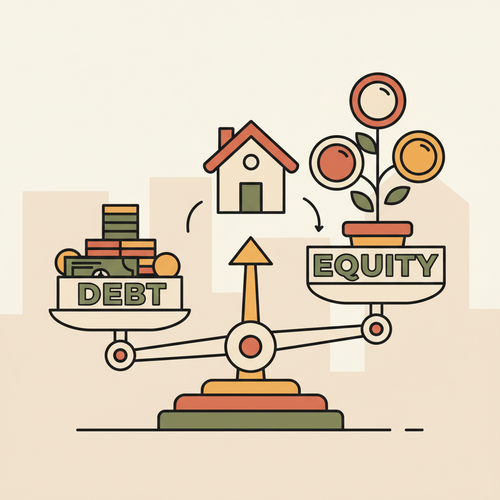
Capital Structure Understanding is paramount for anyone navigating the complex world of business. Specifically, for aspiring business majors and savvy investors, grasping the fundamental differences between debt and equity financing is crucial. Indeed, a company’s capital structure dictates its financial health, risk profile, and ultimately, its potential for growth. Therefore, let’s delve into this vital topic, exploring the intricacies of debt and equity and their implications for businesses.
What is Capital Structure?
In essence, capital structure refers to the specific mix of a company’s long-term debt and equity. This mix funds its assets and operations. Typically, it includes common stock, preferred stock, retained earnings, and various forms of debt. Furthermore, it represents how a business finances its overall operations and growth. Understanding this balance is critical. Consequently, it influences a company’s cost of capital and its financial risk.
The Significance for Businesses
Why does capital structure matter so much? Firstly, it directly impacts a company’s solvency and profitability. A well-managed structure can reduce a firm’s cost of capital. Conversely, a poorly managed one can lead to financial distress. In addition, it affects the company’s ability to raise future funds. Investors, for instance, carefully scrutinize a firm’s capital structure before making investment decisions. Therefore, companies continually strive for an “optimal” capital structure. This balance minimizes their cost of capital while maximizing shareholder value.
Debt Financing: A Detailed Look
Debt financing involves borrowing money that must be repaid, usually with interest, by a specific date. Companies acquire debt through various instruments. For instance, bank loans, corporate bonds, and lines of credit are common examples. This method offers distinct advantages and disadvantages. Businesses leverage debt for several reasons. Indeed, it can fuel expansion or cover operational costs.
Advantages of Debt
- Tax Deductibility: Interest payments on debt are generally tax-deductible. Therefore, this reduces a company’s taxable income. Consequently, the actual cost of debt can be lower.
- No Loss of Ownership: Borrowing money does not dilute the ownership stake of existing shareholders. Hence, current owners retain full control.
- Predictable Payments: Interest payments are usually fixed. This provides a clear financial obligation. Businesses can thus plan their cash flow more effectively.
- Lower Cost of Capital: Historically, debt is often cheaper than equity. Specifically, lenders assume less risk than equity investors.
Disadvantages of Debt
- Fixed Obligations: Companies must make regular interest and principal payments. Failure to do so can lead to default. This carries severe consequences.
- Increased Financial Risk: A high level of debt increases a company’s financial risk. Specifically, during economic downturns, meeting debt obligations becomes challenging.
- Covenants: Lenders often impose restrictive covenants. These are conditions that limit a company’s operational and financial flexibility. For example, they might restrict further borrowing.
- Collateral Requirements: Many loans require assets as collateral. Losing these assets is a risk upon default.
Types of Debt
Debt can be categorized in several ways. Specifically, understanding these distinctions is important. Long-term debt, for instance, includes bonds and mortgages. These have maturities exceeding one year. Short-term debt, conversely, includes lines of credit and commercial paper. These mature within one year. Secured debt is backed by collateral. Unsecured debt, however, is not. Therefore, unsecured debt typically carries higher interest rates.
Equity Financing: A Detailed Look
Equity financing involves selling ownership stakes in the company to investors. In return, investors receive shares. These shares represent a claim on the company’s future earnings and assets. Common forms include common stock, preferred stock, and retained earnings. Specifically, equity capital is permanent. It does not need to be repaid. Thus, it offers different benefits and drawbacks compared to debt.
Advantages of Equity
- No Fixed Payments: Unlike debt, equity does not require fixed interest payments. Consequently, this reduces the pressure on cash flow.
- Permanent Capital: Funds raised through equity do not need to be repaid. This provides long-term stability. Businesses can reinvest earnings freely.
- Risk Sharing: Equity investors share in the company’s risks and rewards. Specifically, they only profit if the company performs well.
- Enhanced Credibility: A strong equity base can make a company appear more stable. Therefore, this can attract more debt financing on favorable terms.
Disadvantages of Equity
- Dilution of Ownership: Selling shares to new investors dilutes the ownership percentage of existing shareholders. Furthermore, this can impact control.
- Higher Cost of Capital: Equity is generally more expensive than debt. Investors demand a higher return. This compensates them for greater risk.
- Loss of Control: Issuing more shares can shift voting power. This might lead to disagreements over strategic decisions.
- Market Scrutiny: Publicly traded companies face intense scrutiny from shareholders and financial analysts. This adds pressure on management.
Types of Equity
There are primary types of equity. Common stock represents basic ownership. Common stockholders typically have voting rights. They share in profits through dividends and stock appreciation. Preferred stock, conversely, offers fixed dividends. Preferred stockholders usually have no voting rights. However, they have a preferential claim on assets and earnings over common stockholders.
Key Differences and Trade-offs
Choosing between debt and equity is a fundamental strategic decision. Indeed, each option presents a unique set of trade-offs. Understanding these differences is crucial for business majors. It helps in evaluating a company’s financial health. Furthermore, it aids in making informed investment choices.
Cost of Capital
The cost of debt is often lower than the cost of equity. This is because interest payments are tax-deductible. Lenders also take less risk than equity investors. Equity investors, consequently, demand a higher rate of return for their investment. This compensates them for greater risk exposure. Therefore, finding the right balance can significantly impact profitability.
Risk Profile
Debt introduces financial risk. Specifically, companies must make fixed payments regardless of performance. High debt levels increase the risk of bankruptcy. Equity, however, does not carry this fixed payment obligation. Thus, it lowers the company’s financial risk. However, it dilutes ownership and control. This presents a different kind of risk for existing shareholders.
Control and Ownership
Issuing debt generally preserves existing ownership and control. Lenders do not typically gain voting rights. Issuing equity, conversely, dilutes ownership. This can shift control. New shareholders gain voting rights. Consequently, strategic decisions might become more complex. Existing owners may lose influence.
Financial Leverage
Debt provides financial leverage. This means that a small change in revenue can lead to a larger change in earnings per share. This can magnify returns for shareholders during good times. However, it also magnifies losses during bad times. Equity does not offer this same leverage. Therefore, companies must carefully consider the use of debt. It can be a double-edged sword.
Optimal Capital Structure: Finding the Balance
There is no one-size-fits-all “optimal” capital structure. Specifically, the ideal mix varies greatly between companies. It depends on several factors. Therefore, businesses continuously analyze their financial situation. They aim to find a balance that minimizes their cost of capital while managing risk effectively.
Factors Influencing the Decision
- Industry Characteristics: Some industries are more stable. They can sustain higher debt levels. For instance, utility companies often have substantial debt.
- Company Size and Maturity: Larger, more established companies often have easier access to debt markets. Smaller, newer companies might rely more on equity.
- Economic Conditions: During periods of low interest rates, debt becomes more attractive. Conversely, high rates favor equity financing.
- Management Philosophy: Some management teams prefer less risk. They opt for lower debt levels. Others are more aggressive.
- Cost of Capital: Ultimately, the goal is to minimize the weighted average cost of capital (WACC). This enhances firm value.
The Modigliani-Miller Theorem (Briefly)
Professors Modigliani and Miller proposed a famous theorem. In a perfect market, they argued, capital structure is irrelevant. However, real-world markets are imperfect. Taxes, bankruptcy costs, and asymmetric information exist. Therefore, capital structure does indeed matter. Companies must consider these real-world factors. Understanding these imperfections is key.
Implications for Business Majors and Investors
For business majors, a deep understanding of capital structure is invaluable. It forms the bedrock of corporate finance. For investors, analyzing a company’s capital structure is essential. It provides insights into its financial health and risk. Furthermore, it influences valuation. Companies with excessive debt, for instance, might be riskier investments. Conversely, those with a balanced structure may offer greater stability.
Students should focus on how companies make these financing decisions. They should also learn to interpret financial statements. Specifically, understanding the debt-to-equity ratio is critical. This ratio indicates financial leverage. It helps assess a company’s reliance on debt. Moreover, evaluating interest coverage ratios is also important. These show a company’s ability to meet its debt obligations. Indeed, a thorough analysis leads to better investment choices. Furthermore, it supports sound business management decisions.
For instance, an investor might compare two similar companies. One has high debt, the other low debt. The high-debt company might offer higher potential returns during good times. However, it also carries greater risk. Conversely, the low-debt company offers more stability. Therefore, the investor must weigh these trade-offs carefully. This informed approach is fundamental. Consequently, it leads to smarter portfolio construction. You can find more insights on financial markets at Reuters or explore investment strategies at Bloomberg. Further research into economic principles is available through The International Monetary Fund.
Conclusion
In conclusion, Capital Structure Understanding is a cornerstone of financial literacy. Both debt and equity play critical roles in financing business operations. Each comes with its own set of benefits and drawbacks. Specifically, debt offers tax advantages and often a lower cost of capital but brings fixed obligations and increased financial risk. Equity, conversely, provides permanent capital and shares risk but dilutes ownership and typically carries a higher cost. Therefore, businesses must carefully balance these components. The goal is to achieve an optimal structure. This minimizes the cost of capital. It also maximizes shareholder value. For business majors and investors alike, mastering this concept is indispensable. It empowers better decision-making. Thus, it paves the way for greater financial success.