
Executive Summary
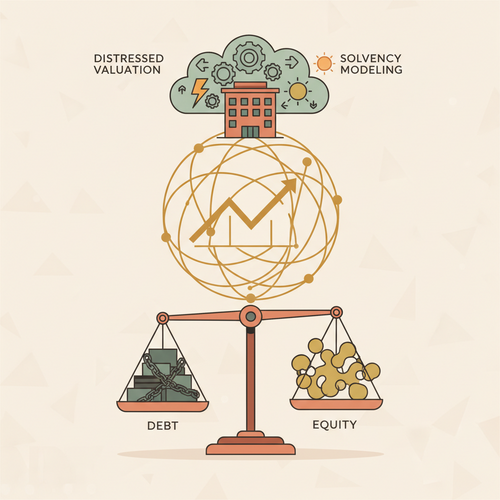
- Corporate solvency modeling is critical for assessing financial viability and mitigating default risk.
- Open-syllabus frameworks foster transparent, robust analysis for Chapter 11 reorganization.
- Accurate distressed valuation methodologies are paramount for creditor recovery and investor returns.
Foundational Principles of Corporate Solvency Analysis
Effective corporate solvency analysis transcends basic liquidity assessments. It requires a comprehensive understanding of an entity’s long-term capacity to meet its financial obligations. This involves evaluating intricate capital structures and projected cash flows under various stress scenarios. Solvency modeling provides an early warning system for potential financial distress.
Defining Solvency: Liquidity vs. Solvency
Liquidity refers to a company’s ability to meet short-term obligations. This is typically measured by metrics like the current ratio or quick ratio. In contrast, solvency denotes a company’s capacity to meet its long-term debts. It assesses the overall financial health and structural integrity of the balance sheet. A company can be liquid yet insolvent, especially with significant off-balance-sheet liabilities.
Understanding this distinction is fundamental. Short-term operational hiccups might impact liquidity. Structural capital imbalances, however, threaten solvency. Investors and creditors prioritize long-term viability over transient cash flow fluctuations. This deep dive into financial structure is non-negotiable.
Early Warning Indicators and Financial Ratios
Proactive solvency modeling relies on a suite of forward-looking indicators. Analysts scrutinize trends in profitability, leverage, and operational efficiency. Deteriorating margins, increasing debt-to-equity ratios, and negative free cash flow warrant immediate attention. These metrics signal potential stress before a formal default.
Key ratios include debt-to-EBITDA, interest coverage ratio, and fixed charge coverage ratio. Declining asset turnover and increasing working capital cycles also indicate operational strain. Comprehensive models integrate these quantitative inputs. They project future performance under various economic conditions. This allows for timely strategic interventions.
The Open-Syllabus Approach to Modeling Frameworks
The complexity of distressed situations demands transparent, adaptable analytical frameworks. An open-syllabus approach emphasizes shared methodologies and peer-reviewed models. This fosters collective intelligence and improves model robustness. It moves beyond proprietary black-box solutions, promoting greater industry consensus.
Leveraging Public Data and Case Studies
Publicly available financial statements provide rich data for model calibration. Regulatory filings, such as 10-K and 10-Q reports, offer critical insights into a company’s health. Historical bankruptcy filings and reorganization plans serve as invaluable case studies. They illuminate common pitfalls and successful restructuring strategies.
Analyzing past distressed events refines predictive accuracy. It helps identify industry-specific risk factors. This empirical grounding strengthens any solvency model. Open sharing of anonymized case data further enhances learning. It accelerates the development of more sophisticated analytical tools.
Collaborative Model Development and Peer Review
Solvency modeling benefits immensely from collaborative development. Financial professionals, academics, and legal experts can collectively refine model assumptions. Peer review identifies blind spots and strengthens methodological rigor. This iterative process leads to more resilient and defensible valuations.
Platforms for sharing code and model structures facilitate this collaboration. Standardization of input data formats also streamlines the process. This collective effort elevates the overall quality of distressed finance analysis. It promotes best practices across the industry.
Chapter 11 Reorganization: Strategic Imperatives and Legal Framework
Chapter 11 of the U.S. Bankruptcy Code offers a structured path for corporate rehabilitation. It allows a financially distressed company to reorganize its business affairs. This process aims to maximize enterprise value for stakeholders. It typically involves negotiating with creditors and developing a reorganization plan.
Strategic imperatives include maintaining operational continuity. Protecting asset values is also crucial. Debtor-in-possession management focuses on stabilizing the business. They concurrently prepare a viable path forward. This intricate legal process demands meticulous financial planning.
Learn more about Chapter 11 bankruptcy here.
Debtor-in-Possession (DIP) Financing Structures
DIP financing is vital for many Chapter 11 cases. It provides fresh capital to the bankrupt entity. This funding supports ongoing operations and reorganization efforts. DIP lenders often receive super-priority status. Their claims rank ahead of pre-petition creditors.
These financing structures are complex. They involve careful negotiation of covenants and collateral. Analysts must model the impact of DIP financing on the reorganized capital structure. This includes evaluating its effect on existing creditor recoveries. Strategic use of DIP funding can be a powerful tool for successful restructuring.
Absolute Priority Rule and Creditor Classifications
The Absolute Priority Rule (APR) governs the distribution of value in bankruptcy. Higher-priority creditor classes must be paid in full before junior classes receive any value. Secured creditors generally have the highest priority. Equity holders are typically at the bottom of the waterfall.
Creditors are classified into various groups based on their legal rights. These classifications significantly influence reorganization negotiations. Modeling creditor recoveries requires a precise understanding of these legal priorities. Deviations from APR require unanimous consent or “cram-down” provisions.
Plan Confirmation: Negotiation and Cram-Down Provisions
A Chapter 11 reorganization plan requires court confirmation. This typically involves approval by each impaired class of creditors. Extensive negotiations occur between the debtor and creditor committees. The goal is to reach a consensus on the distribution of value.
If a class rejects the plan, the debtor might invoke “cram-down” provisions. This forces the plan upon dissenting classes. However, it requires meeting specific legal criteria, including the APR. Valuation models underpin these complex negotiations. They determine the feasibility and fairness of proposed distributions.
Distressed Valuation Methodologies in Practice
Valuing a distressed company differs significantly from valuing a healthy one. Standard valuation models often require substantial adjustments. The inherent uncertainty and potential for liquidation introduce unique challenges. Analysts must employ specialized methodologies to capture these nuances accurately.
Enterprise Valuation in a Going Concern Context
For a company expected to reorganize successfully, enterprise valuation remains crucial. This assesses the total value of the operating business. Methodologies include discounted cash flow (DCF) models and comparable company analysis (CCA). However, inputs must reflect distressed assumptions.
Forecasts must incorporate restructuring charges, post-reorganization capital structure, and operational improvements. Discount rates should account for elevated risk. Sensitivity analysis becomes paramount. It tests the valuation across various recovery scenarios.
Understand Discounted Cash Flow (DCF) valuation in detail.
Liquidation Analysis and Asset Recovery Values
If reorganization is not viable, a liquidation analysis becomes necessary. This estimates the value recovered by creditors if assets are sold. It considers forced sale discounts and administrative costs of bankruptcy. Asset categories are valued individually based on market liquidity.
This analysis provides a critical floor for creditor recoveries. It sets a baseline against which reorganization plans are measured. Creditors often compare the projected reorganization recovery to the liquidation value. They opt for the higher of the two. This model is foundational in Chapter 11 decision-making.
Adjusted Present Value (APV) and Option Pricing Models
The Adjusted Present Value (APV) method is particularly useful in distressed situations. It separates the value of the unlevered firm from the value of its financing side effects. This accounts for tax shields and costs of financial distress. APV provides greater flexibility when capital structure changes dramatically.
Expert Insight: “Option pricing models can offer unique perspectives on distressed equity. Equity in a highly levered firm resembles a call option on the firm’s assets. This framework helps quantify the value of uncertain future cash flows under severe stress.”
Option pricing models treat equity as a call option on the firm’s assets. The strike price is the face value of debt. This approach captures the non-linear payoff structures inherent in distressed equity. It is valuable for assessing the residual value to shareholders.
Integrating Operational Restructuring with Financial Models
Financial modeling in distress cannot occur in isolation. It must integrate deeply with operational restructuring plans. A sound financial model validates the feasibility of proposed operational changes. It quantifies their impact on future cash flows and profitability.
Operational improvements, cost reductions, and asset divestitures directly influence valuation outcomes. Analysts must work closely with turnaround management teams. This ensures models reflect realistic operational assumptions. Misaligned operational and financial plans can doom a reorganization.
Scenario Analysis for Turnaround Strategies
Robust solvency models incorporate extensive scenario analysis. This evaluates the impact of different operational turnaround strategies. What if sales rebound slowly? What if cost-cutting measures are less effective? Each scenario generates a distinct financial projection.
Such analysis quantifies the potential range of outcomes. It helps management choose the most resilient path forward. It also informs creditors about the risks associated with various restructuring proposals. This foresight is critical for navigating uncertainty.
Synergies and Value Destruction in M&A
Distressed M&A can be a complex but value-creating avenue. Solvency modeling must assess potential synergies from asset sales or mergers. Conversely, it must identify potential value destruction. This might arise from integration costs or cultural clashes.
The “sum-of-the-parts” valuation methodology is often employed. It values individual business units separately. This helps determine optimal asset sales or carve-outs. Accurate modeling prevents overpaying or underselling distressed assets.
Advanced Solvency Stress Testing and Risk Mitigation
Beyond basic ratio analysis, advanced solvency modeling involves rigorous stress testing. This simulates extreme market events and internal shocks. It assesses the resilience of the capital structure. The goal is to identify vulnerabilities before they manifest as crises.
Macroeconomic Contagion and Systemic Risk Assessment
Modern solvency models consider broader macroeconomic factors. They evaluate contagion risk from sector-wide downturns or geopolitical events. Systemic risk assessment analyzes how a single firm’s distress could impact financial stability. This is particularly relevant for large, interconnected entities.
Regulatory frameworks increasingly mandate such stress tests. These exercises inform capital allocation decisions. They also guide the development of robust risk mitigation strategies. Understanding the wider ecosystem is paramount.
Covenant Analysis and Default Trigger Mechanisms
Debt covenants are critical components of any solvency model. These contractual agreements specify conditions borrowers must maintain. Breaching covenants can trigger an event of default. This accelerates debt repayment or empowers creditors.
Analysts meticulously track compliance with financial covenants. Modeling various scenarios helps predict potential breaches. This allows for proactive negotiation with lenders. Early engagement can prevent a full-blown default process. It preserves stakeholder value.
Emerging Trends in Distressed Investing and Special Situations
The distressed asset market is dynamic. New strategies and investment vehicles constantly emerge. Understanding these trends is crucial for sophisticated investors. Open-syllabus frameworks must evolve to incorporate these developments.
Capital Structure Arbitrage Opportunities
Capital structure arbitrage involves exploiting pricing discrepancies within a company’s debt and equity. Distressed situations often create such inefficiencies. Investors might buy undervalued debt while shorting overvalued equity. This requires deep analytical insight and robust modeling.
These strategies capitalize on market misperceptions of risk and recovery. They demand highly sophisticated valuation techniques. Predictive models for reorganization outcomes are essential for success. This segment offers significant returns for skilled practitioners.
Role of Activist Investors in Restructuring
Activist investors play an increasingly prominent role in distressed restructurings. They often acquire significant stakes in struggling companies. Their goal is to influence strategic direction and operational changes. This can significantly impact valuation and recovery outcomes.
Modeling the influence of activist campaigns requires a nuanced approach. It involves assessing potential governance changes and strategic shifts. Their presence can either accelerate a turnaround or complicate negotiations. Understanding their motivations is key.
Conclusion
Corporate solvency modeling is an indispensable discipline for navigating financial distress. Open-syllabus frameworks promote transparency and collaborative intelligence. These methodologies provide robust tools for Chapter 11 reorganization and distressed valuation. They empower informed decision-making across all stakeholder groups. Are your firm’s solvency models adequately prepared for the next economic downturn?