
Executive Summary
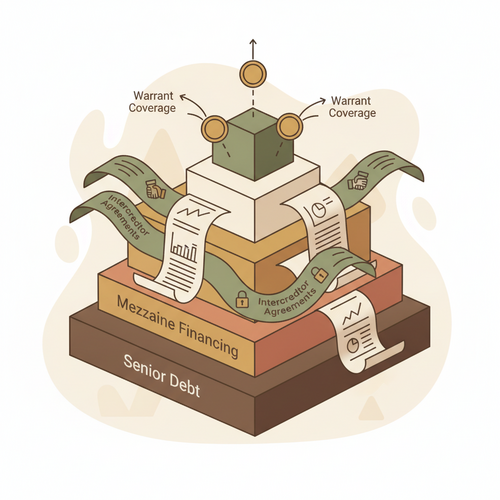
- Subordinated mezzanine capital occupies a critical position within complex capital structures, bridging senior debt and equity.
- Strategic warrant coverage provides equity upside for mezzanine lenders, aligning interests and mitigating yield compression in leveraged transactions.
- Robust intercreditor agreements are paramount for defining rights, priorities, and enforcement mechanisms among different creditor classes, ensuring transaction stability.
Mezzanine Capital’s Strategic Imperative in Leveraged Buyouts
Mezzanine capital serves as a hybrid financing instrument. It blends debt and equity characteristics. This position is unique within the capital stack. It bridges the gap between senior secured debt and pure equity. Sponsors utilize mezzanine to reduce equity contributions. This enhances their internal rates of return (IRRs). It also avoids further senior debt covenants. Mezzanine facilities often feature higher yields. These compensate for their subordinated position. They are unsecured or junior-secured. This implies higher risk for lenders.
In sponsor-backed transactions, mezzanine plays a crucial role. It allows for increased leverage multiples. Companies can undertake larger acquisitions. Growth initiatives become more feasible. This capital often features deferred interest payments. Sometimes, a portion is paid-in-kind (PIK) interest. This structure preserves cash flow for the borrower. It shifts a greater burden to the back end of the loan term. Understanding this strategic fit is paramount. It informs the subsequent design of associated credit enhancements.
Expert Insight: “Market shifts continually refine mezzanine’s role. Yield compression in senior debt often pushes sponsors towards more complex junior capital solutions. Mezzanine provides that essential flexibility without diluting common equity immediately.”
Designing Effective Warrant Coverage: Equity Upside for Mezzanine Investors
Warrant coverage is a cornerstone of mezzanine financing. It provides an equity “kicker” for lenders. This compensates for the subordinated risk profile. Warrants grant the right to purchase equity. This happens at a predetermined price. The strike price is typically nominal. This ensures maximum upside participation. They are generally exercisable upon a liquidity event. This includes an IPO or a sale of the company.
Structuring effective warrant coverage requires precision. Key terms include the warrant percentage. This is the portion of fully diluted equity. Vesting schedules are also critical. Expiration dates define the warrant’s life. Anti-dilution provisions protect the warrant holder. These adjust for stock splits or future equity issuances. Proper design maximizes the mezzanine lender’s return. It also aligns incentives with the sponsor’s objectives. A well-crafted warrant package enhances overall deal attractiveness. It sweetens the risk-adjusted return profile.
Valuation Methodologies for Mezzanine Warrants
Warrant valuation involves sophisticated modeling. The Black-Scholes model is a common starting point. It requires inputs like volatility and time to expiration. Monte Carlo simulations offer greater flexibility. They account for complex deal structures. Implied volatility is a critical parameter. It often proves challenging to ascertain accurately for private companies. Independent third-party valuations are frequently commissioned. These provide an objective assessment. Fair value accounting standards mandate such rigor. Understanding these methodologies is vital. It impacts financial reporting and investment decisions.
- Fully Diluted Basis: Warrants are typically calculated on a fully diluted, as-converted basis, reflecting all potential equity claims.
- Strike Price: Often set at a nominal value (e.g., $0.01 per share) to maximize the equity participation.
- Anti-Dilution: Provisions like “ratchet” or “weighted-average” clauses protect the warrant holder’s percentage ownership from subsequent equity rounds.
Intercreditor Agreements: Navigating Senior-Subordinated Dynamics
Intercreditor agreements (ICAs) are fundamental documents. They govern relationships among creditors. These agreements are crucial in leveraged transactions. They define the relative rights of each debt tranche. This includes senior, unitranche, and mezzanine lenders. ICAs dictate payment priorities. They specify lien priorities. Enforcement rights are also meticulously outlined. A clear ICA prevents disputes during distress. It provides certainty for all parties involved. This certainty is vital for deal execution.
Without a robust ICA, chaotic outcomes can emerge. Creditor groups may clash during a default scenario. This prolongs resolution processes. It often diminishes recovery values. The agreement meticulously details subordination principles. These dictate who gets paid first. They cover both payment and lien subordination. Understanding these intricate provisions is not optional. It is absolutely essential for risk management. Lenders scrutinize ICAs extensively. They protect their investment positions.
Market Warning: “Ambiguous intercreditor language can create significant enterprise value erosion in a workout scenario. Every ‘what if’ scenario must be considered and explicitly addressed within the agreement’s four corners.”
Key Provisions and Enforcement Rights in Mezzanine Intercreditor Pacts
Several critical provisions define mezzanine ICAs. Payment blockage periods are standard. Senior lenders can block junior debt payments. This typically occurs upon a payment default. The blockage period is finite, usually 180 days. Standstill provisions restrict junior creditors. They cannot enforce remedies during certain periods. This allows senior lenders to control workout processes. It prevents precipitous actions by mezzanine holders.
Lien Subordination and Collateral Control
Lien subordination is a core element. Mezzanine debt typically holds a junior lien. This places it behind senior secured debt. The ICA specifies this hierarchy precisely. It details collateral disposition rights. Senior lenders control asset sales in default. Mezzanine lenders receive proceeds only after senior claims are satisfied. This waterfall provision is non-negotiable. It defines recovery expectations. Understanding the collateral control mechanisms is paramount. It directly impacts potential recovery values.
Enforcement rights are carefully delineated. Mezzanine lenders possess certain remedies. These become active after senior standstill periods expire. They can initiate foreclosure on junior liens. They can also pursue equity pledges. This typically involves the pledge of the parent company’s equity in the operating company. This provides a potential path to control. These rights are always subordinate. They remain subject to senior lien holders. Negotiation of these clauses is intense. Both sides seek to optimize their positions.
- Payment Blockage: Senior lenders can block mezzanine interest payments for a defined period (e.g., 180 days) during certain defaults.
- Standstill Period: Mezzanine lenders are typically restricted from exercising remedies for a period (e.g., 90-180 days) after a default.
- Subordination: Both payment and lien subordination are explicitly defined, detailing the waterfall of distributions in an insolvency event.
- Control Rights: Senior lenders generally retain control over collateral, foreclosure, and amendment processes during defaults.
Mitigating Risk: Subordination, Springing Liens, and Equity Pledges
Risk mitigation is central to mezzanine deal structuring. The subordination structure itself is a primary mitigant. Mezzanine lenders accept a junior position. They are compensated through higher yields and equity upside. Springing liens represent another protective mechanism. These liens become active under specific conditions. They often “spring” into existence upon a senior debt repayment. This enhances the mezzanine lender’s collateral position.
Equity pledges are standard in mezzanine deals. The sponsor pledges the equity of the operating company. This is pledged to the mezzanine lender. In a default, the mezzanine lender can take control. This provides a powerful enforcement leverage. This strategy offers an alternative recovery path. It avoids direct competition with senior lenders on asset sales. Such pledges are critical. They incentivize sponsors to perform. They provide a viable path to equity ownership. This transforms the mezzanine position.
Intercreditor Agreement Nuances: MAC Clauses and Covenants
Material Adverse Change (MAC) clauses are also relevant. They provide an exit ramp under severe conditions. These clauses allow lenders to declare default. This happens when significant negative events occur. Negotiating MAC clauses requires careful precision. Covenant structures also heavily influence risk. Mezzanine debt often features less restrictive covenants. These are sometimes called “covenant-lite” structures. However, reporting covenants remain stringent. This ensures transparency for lenders. Understanding the interplay of these elements is key. It manages downside risk effectively.
Market Trends and Evolving Mezzanine Capital Strategies
The leveraged finance market is dynamic. Yield compression has been a notable trend. This drives innovation in mezzanine structures. Lenders seek new ways to achieve target returns. Higher leverage multiples are common. Debt-to-EBITDA ratios continue to expand. This increases the risk profile for all debt tranches. Mezzanine capital adapts to these conditions. It offers more flexible, bespoke solutions. These cater to specific transaction needs. This adaptability maintains its relevance.
The rise of unitranche financing is impactful. Unitranche combines senior and junior debt. It creates a single blended facility. This simplifies the capital structure for borrowers. It also streamlines intercreditor dynamics. Mezzanine still thrives in specific niches. It remains critical for larger, complex deals. It is essential where unitranche capacity is limited. Or where bespoke equity features are desired. Hybrid structures continually emerge. These reflect ongoing market innovation. Staying current with these trends is paramount.
Impact of Economic Cycles on Mezzanine Deployment
Economic cycles significantly influence mezzanine deployment. During expansionary periods, deal flow increases. Lenders are more aggressive with terms. They accept lower yields. Covenant packages become looser. During downturns, risk aversion increases. Mezzanine availability tightens considerably. Lenders demand higher yields. Equity components become larger. Stress-testing portfolios becomes critical. Understanding these cyclical impacts is vital. It informs deployment strategies. Prudent risk management is always essential. This applies across all economic environments.
Conclusion
Subordinated mezzanine capital remains indispensable. It fuels growth in leveraged transactions. Strategic warrant coverage provides essential equity upside. It aligns lender and sponsor interests. Robust intercreditor agreements manage complex creditor dynamics. They ensure stability and predictability. These instruments mitigate risk effectively. They protect investment recovery scenarios. Navigating these complexities requires deep expertise. Market participants must remain vigilant. Continuous adaptation to market shifts is vital.
Successful execution hinges on meticulous structuring. It also depends on experienced legal counsel. Understanding every nuance is critical. This ensures optimal capital deployment. It protects stakeholder value. Effective design leads to superior outcomes. Are your current capital structures optimized for today’s dynamic market?